


Losing My Hair, Finding Myself:
- Candace Castro

- Apr 6
- 5 min read
A Story of Survival and Self-Discovery
History and culture have shaped so much of who we are — and hair, perhaps more than we realise, has been woven into that story for centuries.
In the Bible, Samson's strength was said to reside in his uncut hair. In ancient Egypt, elaborate wigs signified wealth and rank. During the French Revolution, women cropped their hair short in solidarity with those who had gone to the guillotine. The bob of the 1920s became a radical declaration of female independence, scandalising polite society. In the 1960s, long hair on men was a protest against war and conformity. And in more recent decades, the natural hair movement has reclaimed identity and pride for countless women of colour who were once told their natural texture was "unprofessional."
Hair has never just been hair. It has always been story. Statement. Survival. I understood this intellectually, of course. But it wasn't until I lost most of mine that I truly felt it.

The Hair I Lived In Looking back through old photographs over the years, what I noticed most — in every single one — was my hair. I had never really been aware of how much of my identity was tied up in it.
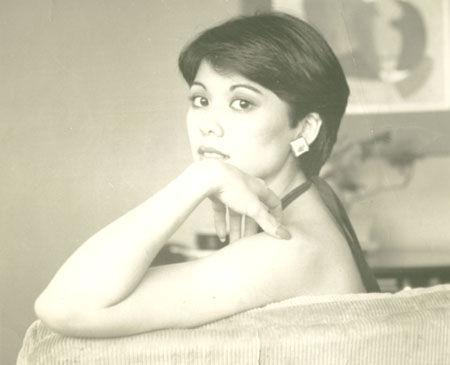
For most of my life, I had very long, thick hair. In my twenties, as a broke college student in Canada, I couldn't afford regular haircuts — so my hair grew almost to my hips. I used to wrap it around me underneath my winter coat for warmth. I remember turning over in bed and being held in place by the sheer weight of it.
At one particularly desperate moment, I cut it and sold it. Human hair wigs were in high demand at the time. Even then, I suppose, my hair had value — literal value.


In my thirties and forties, running my own business,
I could finally afford regular trims. I kept it mid-back, experimenting along the way. Remember the Farrah Fawcett cut? The permed hair from Flashdance? I'm really dating myself here — but those styles weren't just trends. They were reflections of who we were trying to be. Confident. Sexy. Professional. Free.
And through my fifties and into my sixties, I still had long, luxuriant hair.
Until a medical emergency changed all of that.
Warsaw, 2022

In 2022, I almost died from a ruptured appendix — in Warsaw, far from home. I spent six weeks in hospital and ten weeks recovering in my hotel room. And that is when the side effects began.
I started losing my hair. Great clumps of it, every single day.

It was terrifying to look down at the floor after a shower. To watch it come away in
the comb. Massive amounts, sitting there, staring back at me — and me staring back in shock. Hair loss after severe physical trauma isn't uncommon; the body diverts energy away from what it considers non-essential functions — hair growth among them — in order to survive. Intellectually, I understood that. Emotionally, it felt like I was disappearing.
This went on for months. My doctor advised me not to colour my hair and to cut it short. The grey was coming in so obviously, and what remained had grown so thin, that I no longer recognised the woman looking back at me in the mirror.
That was the hardest part. Not the cutting. Not even the shedding. But the quiet unravelling of who I thought I was.
The Grief Nobody Mentions
At first, I didn't navigate it gracefully at all.
I felt shock. Disbelief. A low hum of anxiety that followed me into every room. What if it all fell out and never came back? What would it mean to move through the world bald — me, who had always been known for her hair?

It surprised me how deep the fear ran. Logically, I knew it was "just hair." But emotionally, it felt like losing a companion who had been with me my entire life — through youth, through motherhood, through business and heartbreak and reinvention. My hair had been my signature. My shelter, in a way. Letting it go felt like standing in front of the world with nothing to hide behind.
There were days I avoided mirrors. Days I compared old photographs to my reflection and felt a pang of longing so sharp it surprised me.
I had to let myself feel that. I had to let myself mourn the woman I had been — or at least the version of her I had clung to.
It was only in losing it that I became aware of how much I had been hiding behind it.
When people met me, they didn't always see me. They saw my hair first. And without it, I felt exposed. Fragile. Ordinary. The visual signature I had carried my whole adult life had softened — and I had no idea who I was without it.
The Question That Opened a Door

Slowly, gratefully, my hair began to grow back. Not nearly as thick or as long as it had once been — but enough. Enough that strangers still stop me and tell me they envy my hair. I smile when they do.
But inside, I know something they don't.
The real transformation had nothing to do with my hair.
Around the time it was growing back, something else was shifting too. The movement to embrace grey had become something of a quiet revolution for women — a gentle pushback against impossible beauty standards. So I stopped colouring it. I let the grey come in fully. I kept it shorter than I ever had — shoulder length now.
And somewhere in that process, I started asking myself a question I had never thought to ask before:
If I am not my hair… then who am I?
That question opened a door.
I started noticing what had remained unchanged through all of it. My laugh. My curiosity. My resilience. My compassion. The strength that had survived a ruptured appendix in a foreign country. The strength that had rebuilt a body from the inside out. The strength that could look at loss — real loss — and still choose gratitude.
I realised something: the identity I thought was woven into my hair had actually been woven into my spirit all along. The hair was just the wrapping.
We Are Becoming
There was also something humbling — and strangely liberating — about no longer being "the woman with the amazing hair." When that visual signature softened, I had to rely on something else entirely. Presence. Authenticity. Conversation. Energy. I could no longer hide behind a curtain of thick, flowing strands.
I had to show up fully. And in that exposure, I found freedom.

It wasn't a single brave moment. It was a thousand quiet ones.
I practised small acts of acceptance. I stopped colouring. I stopped resisting. When someone complimented my hair, I said "thank you" without deflecting. When I caught my reflection and felt that flicker of unfamiliarity, I would soften and whisper to myself: we are becoming.
Over time, I realised I hadn't lost an identity. I had shed a layer. Like a tree that drops its leaves in winter — not because it is dying, but because it is conserving strength for new growth.
Letting go of the self I had built around my hair made space for something deeper. A more grounded sense of who I am — one that isn't dependent on how I look in a photograph.
Almost dying taught me this: when everything external falls away, what remains is who you really are.
Almost dying taught me this:
When everything external falls away, what remains is who you really are.
Sat Nam,
Candace


Comments